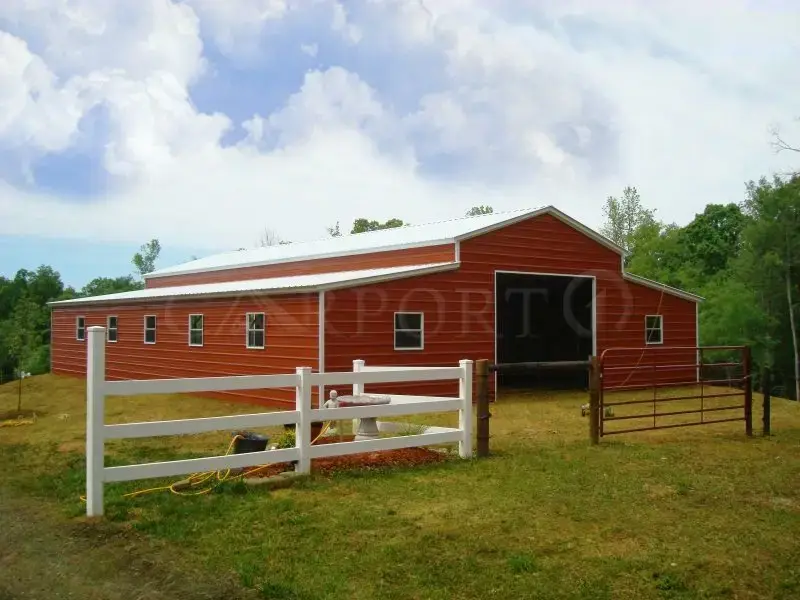
Metal Buildings in California: Built for Every Challenge the Golden State Delivers
California is a state of extremes — and not just culturally. From the seismic activity that makes earthquake engineering a fact of life to the wildfire seasons that have reshaped how and where people build, from the scorching heat of the Inland Empire to the heavy snowpack of the Sierra Nevada, California demands more from its buildings than almost any other state in the country. That is precisely why metal buildings in California have surged in popularity among homeowners, farmers, ranchers, and business owners who need structures that perform under pressure. Steel does not burn the way wood does. It does not crack in earthquakes the way masonry does. And it does not rot in California’s coastal fog or warp in its desert heat. At Carport1, we deliver and install custom metal carports, garages, barns, workshops, and commercial steel buildings across California, each one engineered for the specific seismic zone, wind exposure, and climate conditions of your property.
Seismic Reality: Why Steel Outperforms in Earthquake Country
California sits on some of the most seismically active ground in North America. The San Andreas Fault system stretches over 800 miles through the state, and dozens of additional fault lines create earthquake risk from the Oregon border to the Mexican border. The California Building Standards Code (Title 24) assigns Seismic Design Categories ranging from B to E depending on location, soil type, and proximity to known fault lines — and every permanent structure must be engineered to meet these requirements.
Steel is inherently suited for seismic performance. Its ductility — the ability to flex and absorb energy without fracturing — gives metal buildings a significant advantage over rigid materials like concrete block or unreinforced masonry that tend to crack and crumble during shaking. A properly engineered steel building in California with moment-resistant connections and appropriate bracing can absorb and redistribute seismic forces effectively, protecting both the structure and its contents.
The 2026 California Building Code updates have further refined seismic site classification requirements, narrowing the methodology for classifying soil types. This means your building’s engineering must be even more site-specific than before — and that is exactly the kind of precision engineering that Carport1 provides.
Wildfire Resistance: A Non-Negotiable in Modern California
After years of devastating wildfire seasons — the Camp Fire, the Dixie Fire, the Park Fire — California has implemented some of the most stringent fire-hardening building requirements in the nation. Properties in Wildland-Urban Interface (WUI) zones face enhanced fire-rated construction requirements, including fire-resistant roofing, exterior wall materials, vent screening, and defensible space mandates.
Steel is classified as a non-combustible material, which gives metal buildings an inherent advantage in WUI zones. While no structure is completely fireproof, a steel building will not contribute fuel to an approaching wildfire. It will not ignite from ember exposure the way wood siding and shake roofing will. For property owners in fire-prone areas of the Sierra foothills, the coastal mountains, or the chaparral-covered inland valleys, steel construction is increasingly viewed as the responsible and practical choice.
California’s Diverse Climate Regions and What They Mean for Your Building
The Central Valley: Agricultural Powerhouse
The Central Valley stretches over 450 miles through the heart of California, encompassing the Sacramento Valley in the north and the San Joaquin Valley in the south. This is the agricultural engine of the nation — producing over a third of America’s vegetables and three-quarters of its fruits and nuts, with a total agricultural market value exceeding $59 billion. The Valley’s climate is characterized by hot, dry summers (routinely exceeding 100 degrees) and cool, foggy winters with occasional frost.
For Valley farmers, metal agricultural buildings are essential infrastructure. Equipment barns protect combines, tractors, and specialized harvesting machinery worth hundreds of thousands of dollars. Hay barns, packing sheds, and livestock shelters dot the landscape. The Valley’s intense heat and dry air mean wood buildings suffer from rapid drying, cracking, and warping — steel handles these conditions without degradation. And because the Valley has lower seismic risk than coastal areas, building engineering here can focus primarily on wind loads and practical functionality.
Southern California: Sun, Wind, and Urban Density
From Los Angeles through the Inland Empire to San Diego, Southern California combines warm temperatures, Santa Ana wind events that can exceed 80 mph, and earthquake risk that requires serious structural engineering. Metal carports and garages are popular throughout the suburban sprawl of the region, providing covered parking and storage space on properties where lot sizes are shrinking but vehicle counts are not. Commercial steel buildings serve the region’s logistics, distribution, and light manufacturing sectors.
Northern California and the Sierra Nevada
Northern California adds snow load and heavier rainfall to the equation. Sierra Nevada communities like Truckee, Mammoth Lakes, and the Lake Tahoe basin can receive over 300 inches of snowfall annually, requiring roof snow load ratings of 80 psf or more in some areas. Metal buildings in these locations need steep-pitched roofs, heavy-gauge framing, and engineering that accounts for both seismic forces and extreme snow loads simultaneously — a combination that steel handles better than any other material.
Popular Metal Building Applications in California
Agricultural Barns and Equipment Storage
California’s $59-billion agricultural sector runs on equipment, and that equipment needs protection. From almond orchards in the San Joaquin Valley to wine grape vineyards in Napa and Sonoma, our metal barns and equipment buildings provide the clear-span space and durability that farming demands.
Residential Garages and ADU Workshops
With California’s push toward Accessory Dwelling Units (ADUs) and the high cost of traditional construction, a prefabricated metal garage or workshop offers a cost-effective way to add functional space to residential properties. While ADU regulations have their own specific requirements, a metal workshop or detached garage can provide the footprint you need at a fraction of the cost of stick-built construction.
Commercial and Light Industrial Buildings
From auto shops to distribution centers to contractor yards, California businesses choose steel for its speed of construction, lower cost per square foot, and long-term durability. Our commercial buildings can be configured with loading bays, overhead doors, mezzanines, and office partitions to suit virtually any business application.
Vehicle and Equipment Protection
Whether it is a metal carport in California to protect your daily driver from UV damage or a fully enclosed garage for a classic car collection, steel construction delivers the protection and security California property owners need. RV covers and boat storage buildings are also in high demand, particularly in communities near the coast, the Delta, and the state’s many lakes.
California Permitting: What You Need to Know
California has some of the most thorough building permit processes in the country. Here is what to expect:
- Permits are required in virtually every jurisdiction for any permanent structure, including carports, garages, and agricultural buildings. Very few exemptions exist.
- Title 24 compliance — the California Building Standards Code — is mandatory statewide. This includes seismic design, wind load, energy efficiency, and fire safety requirements.
- Stamped engineering plans from a California-licensed engineer are typically required. Carport1 provides these as part of our service for California installations.
- Zoning verification — check setbacks, lot coverage limits, height restrictions, and any overlay zones (WUI, flood, coastal) that may apply to your property.
- Plan review timelines vary significantly by jurisdiction. Urban counties may take 4 to 8 weeks for plan review, while rural counties can be faster. Factor this into your project timeline.
- Foundation inspections are typically required before the building is erected, and a final inspection after completion.
Our team is experienced with California permitting and will support you through the process with the documentation your building department requires.
Choose Carport1 for Your California Metal Building
Building in California means navigating a complex landscape of codes, climate zones, seismic requirements, and fire safety regulations. You need a partner who understands all of it. Carport1 delivers:
- Free Delivery and Professional Installation — no hidden fees, no subcontractors. Our crews handle the job from start to finish.
- California-Specific Engineering — seismic, wind, snow, and fire requirements built into your design from the start.
- Complete Customization — size, roof style, colors, doors, windows, insulation, and accessories configured to your exact needs.
- Durable Construction — heavy-gauge American steel with baked-on panel coatings that resist UV degradation, coastal salt air, and the thermal cycling of California’s diverse climates.
- Financing Options — rent-to-own and financing programs available to make your project work within your budget.
Call us at 1-877-242-0393 or request a free quote to get started. Whether you are in the Central Valley, the foothills, the desert, or the coast, we will engineer a building that is right for your specific California location.
California Metal Building FAQs
Do metal buildings meet California earthquake codes?
Yes, when properly engineered. Steel’s ductility and strength-to-weight ratio make it well-suited for seismic applications. Our California metal buildings are designed with the connections, bracing, and foundation details required by your specific Seismic Design Category. We provide stamped engineering plans from licensed professionals that demonstrate code compliance for your jurisdiction.
Are metal buildings allowed in California’s fire zones?
Steel is classified as non-combustible, which is a significant advantage in WUI zones. However, fire zone construction requirements address more than just wall and roof materials — vents, openings, and proximity to combustible vegetation also factor in. Your local fire authority and building department will specify the complete set of requirements for your parcel. Steel construction gives you a strong starting point for compliance.
What about California’s energy efficiency requirements (Title 24)?
California’s energy code applies to conditioned (heated or cooled) buildings. If your metal building will be climate-controlled, it will need to meet insulation and efficiency standards. For unconditioned structures — open carports, uninsulated equipment storage, agricultural shelters — energy code requirements are minimal. We offer insulation packages that meet Title 24 requirements for enclosed, conditioned buildings.
How much does a metal building cost in California?
Costs vary widely based on size, complexity, location, and the engineering requirements of your specific site. California’s stringent code requirements can add to engineering costs compared to less regulated states. Contact us at 1-877-242-0393 for an accurate quote based on your specifications and location — we will give you a transparent, all-inclusive price that covers your building, delivery, and installation.
Can I put a metal building on my rural California property?
In most cases, yes. Agricultural-zoned properties often have more flexibility for metal building installation, particularly for structures that serve farming or ranching purposes. However, even rural properties in California typically require permits and must comply with building, zoning, fire, and environmental regulations. We work with rural California property owners regularly and can guide you through the process.