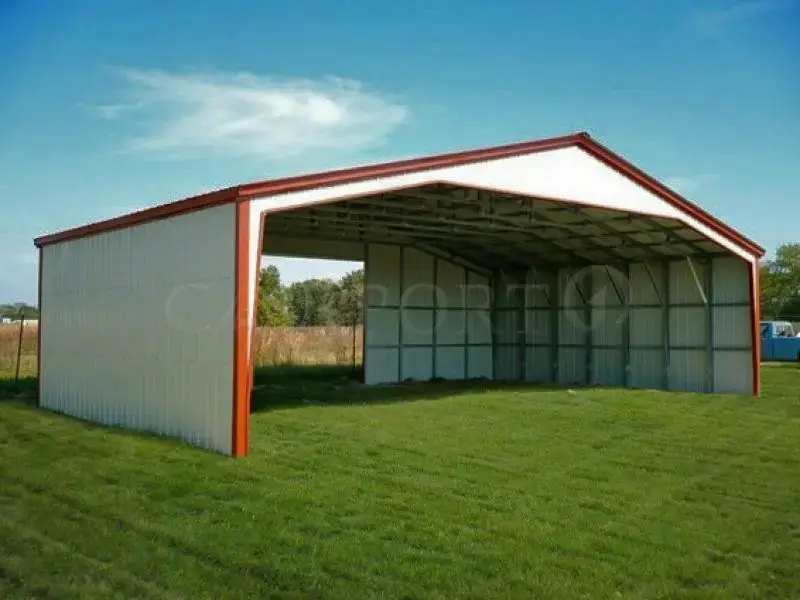
Colorado Metal Buildings: Engineered for Altitude, Snow, and Wind
Colorado is a state that will test any building you put on it. From the ferocious Chinook winds that blast the Front Range with gusts exceeding 100 mph to the crushing snow loads in the high Rockies, from the mile-high UV exposure that degrades materials at an accelerated rate to the rapid freeze-thaw cycles that crack and heave foundations — construction in the Centennial State is not for the faint of heart. This is exactly where steel buildings in Colorado earn their keep. Metal construction handles every one of these challenges with a resilience that wood, vinyl, and fabric simply cannot match. Whether you need a metal carport in Colorado for your Front Range property, an equipment barn for your Western Slope ranch, or a commercial steel building near the I-25 corridor, Carport1 delivers structures engineered specifically for Colorado’s demanding conditions — with free delivery and installation included.
Colorado’s Wind: The Force Most People Underestimate
Ask a Colorado native what surprises newcomers the most, and the answer is almost always the wind. Colorado’s Front Range corridor — from Fort Collins through Denver, Colorado Springs, and Pueblo — experiences some of the most extreme non-tropical wind events in the United States, driven by a unique atmospheric phenomenon: Chinook and Bora winds.
How Chinook Winds Affect Your Building
Chinook winds are warm, dry downslope winds that accelerate as they pour off the eastern face of the Rockies. Bora winds are the cold-air equivalent. Both peak during winter months and both generate devastating gusts. The National Center for Atmospheric Research facility on Table Mesa near Boulder has recorded a peak gust of 147 mph — that is equivalent to a Category 4 hurricane. Even in less extreme events, gusts of 80 to 100 mph along the Front Range are not unusual.
For building purposes, this means the Colorado Front Range Gust Map — developed by the Structural Engineers Association of Colorado — supplements the standard IBC wind design criteria with area-specific wind speed data. Many jurisdictions along the Front Range have adopted these higher values, and your metal building needs to be engineered accordingly. Carport1 configures every Colorado building for the specific wind load requirements of your location — not a generic national average.
Eastern Plains Wind Exposure
East of I-25, the Colorado plains are flat, treeless, and fully exposed to both Chinook-driven westerly winds and powerful winter storm systems. Farm and ranch properties on the plains need buildings with robust anchoring systems, vertical roof panels that resist uplift, and framing rated for sustained wind loads. This is where heavy-gauge steel construction proves its value over lighter materials that can be peeled apart or overturned by a single wind event.
Snow Loads: The Mountain and Foothill Reality
Colorado’s snow load engineering requirements are among the most complex and location-specific in the country. The state requires a minimum roof snow load of 30 psf, but actual requirements vary enormously based on elevation, terrain exposure, and local climate data.
- Front Range cities (Denver, Colorado Springs): 30-35 psf ground snow load is typical.
- Foothill communities (Evergreen, Conifer, Black Hawk): 40-60 psf is common, depending on elevation and aspect.
- Mountain towns (Breckenridge, Vail, Aspen, Telluride): 80-150+ psf may be required. Some locations in Summit County and the San Juan Mountains exceed 200 psf.
- Western Slope (Grand Junction, Montrose, Delta): 20-30 psf in the lower valleys, significantly more at higher elevations.
The Structural Engineers Association of Colorado published a Colorado Design Snow Loads study that many jurisdictions have adopted. Because standard national snow load tables do not account for Colorado’s extreme local variations, site-specific analysis is often required — especially above 8,000 feet in elevation. When you order a metal building from Carport1 for a Colorado mountain location, we engineer it to the specific snow load your jurisdiction mandates.
What Colorado Property Owners Build — And Where
Front Range: Garages, Workshops, and Commercial Buildings
The Front Range corridor from Fort Collins to Pueblo is home to the vast majority of Colorado’s population, and it drives the highest volume of metal building orders in the state. Residential metal garages in Colorado protect vehicles from hail — the Front Range is one of the most hail-prone regions in the country — while workshops and hobby buildings serve the state’s deeply ingrained DIY and outdoor recreation culture. Commercial steel buildings along the I-25 corridor serve contractors, auto shops, light manufacturers, and the cannabis cultivation industry.
Mountain Communities: Equipment Storage and Seasonal Buildings
Colorado’s ski industry generates nearly $1.6 billion in annual economic output, and the mountain communities that support it need functional buildings that can handle extreme winter conditions. Equipment storage buildings, maintenance shops, and covered parking structures all benefit from steel construction. The key is engineering for the heavy snow loads — and steel’s superior strength-to-weight ratio means you get the structural capacity you need without the massive framing members that make timber construction in the mountains prohibitively expensive.
Western Slope and Ranch Country
From Grand Junction through the Roaring Fork Valley and down into the San Luis Valley, Colorado’s western and southern regions are defined by agriculture, ranching, and outdoor recreation. Cattle ranching, hay production, and fruit orchards (the Palisade area is famous for peaches and wine grapes) all require covered storage, equipment barns, and livestock shelters. Our metal barns in Colorado provide the clear-span interiors and weather protection that these operations need, at a cost per square foot that makes economic sense for agricultural budgets.
Eastern Plains: Agriculture and Storm Protection
The Eastern Plains are Colorado’s wheat, corn, and cattle country — flat, wind-swept, and hail-prone. Metal buildings here need to be built heavy and anchored deep. Equipment barns, hay storage, and grain handling buildings are the primary applications. Hail damage to unprotected equipment is a constant financial threat on the plains, and a steel building that keeps your combine and tractor under cover can save you thousands in repair costs every season.
Colorado’s Outdoor Economy and Metal Building Demand
Colorado’s outdoor recreation industry contributed $17.2 billion to the state’s GDP in 2023 — growing nearly 24% in a single year. This economy runs on equipment: skis, mountain bikes, kayaks, side-by-sides, snowmobiles, camping trailers, and RVs. All of it needs storage. Metal RV covers, enclosed toy hauler garages, and multi-bay equipment buildings are among our most popular products in Colorado. Property owners in mountain and foothill communities especially value the ability to keep their gear protected and organized without building a traditional stick-framed garage at mountain construction prices.
Permits and Building Codes in Colorado
Colorado does not have a single statewide building code for all jurisdictions. Instead, codes are adopted and enforced at the local level — by cities, counties, and sometimes special districts. Here is what you need to know:
- Most Front Range cities and counties have adopted the International Building Code (IBC) 2021 and require permits for all permanent structures, including carports, garages, and storage buildings.
- Mountain counties (Summit, Eagle, Pitkin, San Miguel) typically have strict building departments with enhanced requirements for snow load, fire resistance, and wildlife impact. Expect thorough plan review processes.
- Rural eastern plains counties may have less stringent requirements, with some jurisdictions not requiring permits for agricultural structures or small accessory buildings. Verify with your county building department.
- Wind load engineering must reference the Colorado Front Range Gust Map in jurisdictions that have adopted it, rather than relying solely on ASCE 7 national maps.
- Snow load engineering should reference the SEAC Colorado Design Snow Loads study for mountain and foothill locations.
- Wildfire zones in foothill and mountain areas may impose additional requirements for non-combustible materials and defensible space — steel construction inherently satisfies the non-combustible material requirement.
Carport1 provides certified engineering documents tailored to your specific Colorado jurisdiction. We know the process and we will give you everything your building department needs.
Why Carport1 Is the Right Choice for Colorado
Colorado’s combination of extreme wind, heavy snow, intense UV, and hail makes it one of the most demanding states for any structure. Here is how we deliver:
- Free Delivery and Installation — Your building is delivered and professionally erected on your prepared site at no additional cost, whether you are on the Front Range, the Western Slope, or the Eastern Plains.
- Colorado-Specific Engineering — Wind loads based on Front Range Gust Map data, snow loads per SEAC Colorado Design Snow Loads, and proper seismic classification for your location.
- Heavy-Gauge Steel Options — 14-gauge standard, with 12-gauge available for mountain and high-wind locations that need maximum structural capacity.
- Vertical Roof Standard — We strongly recommend vertical roof panels for Colorado installations, as they shed snow and hail more effectively than horizontal configurations.
- Full Customization — Size, color, doors, windows, insulation, and accessories — all configured to your specifications.
- Financing Available — Rent-to-own and financing programs fit any budget.
Call 1-877-242-0393 or request a free quote online today. Our Colorado building specialists will design a structure that handles everything the Centennial State can throw at it.
Colorado Metal Building FAQs
Can a metal building handle Colorado’s heavy snow?
Absolutely — when it is engineered correctly. Steel’s strength-to-weight ratio is ideal for snow load applications. We engineer every mountain and foothill building to the specific ground snow load your jurisdiction requires, then convert that to the appropriate roof snow load accounting for exposure, slope, and drift potential. Buildings in Summit County, for example, may need 100+ psf roof snow load ratings, and steel handles these loads efficiently.
What about the hail on Colorado’s Front Range?
Colorado’s Front Range experiences some of the most frequent and severe hail in the country. Steel panels resist hail impact far better than wood siding, vinyl panels, or fabric covers. While extremely large hailstones can dent steel panels, the structural integrity of the building is not compromised. More importantly, your vehicles, equipment, and other property stored inside remain fully protected — and that is where the real financial savings lie.
Do I need a permit for a metal building in unincorporated Colorado?
It depends on the county. Some rural counties on the Eastern Plains have minimal permit requirements for accessory structures or agricultural buildings. Most Front Range counties, mountain counties, and Western Slope counties require permits for permanent structures. Contact your county building department to verify. Carport1 can provide the engineering documents needed for any Colorado jurisdiction.
How do Chinook winds affect a metal building?
Chinook and Bora winds create extreme wind pressures — particularly uplift forces on roofs and suction forces on leeward walls. A properly engineered metal building accounts for these forces through reinforced anchor connections, appropriate gauge framing, and bracing designed for the specific wind speeds your location requires. The key is not buying a generic building and hoping it holds — it is engineering for the actual conditions of Colorado’s Front Range.
Is a metal building a good option for altitude? We are above 9,000 feet.
Yes, and steel is arguably the best option at high altitude. UV exposure intensifies with elevation, degrading wood, fabric, and plastic materials faster than at lower altitudes. Steel with quality panel coatings resists UV degradation effectively. Additionally, high-altitude construction often requires transporting materials over mountain passes — steel’s prefabricated components are more efficient to transport and assemble than traditional framing lumber, which can reduce both delivery costs and construction timelines for remote mountain sites.