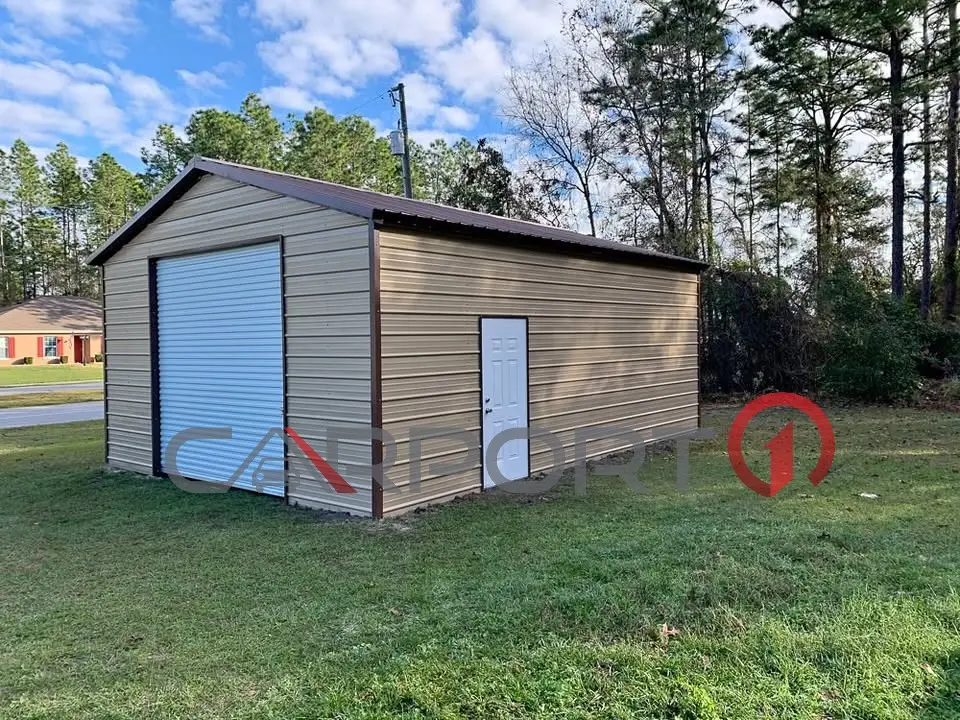
Metal Buildings in Kansas: Standing Strong in the Heart of Tornado Alley
Kansas does not get the luxury of mild weather. This is the state that inspired The Wizard of Oz for a reason — tornadoes are not an occasional threat here, they are a way of life. Layer on top of that the scorching summer heat on the western plains, the heavy spring rains in the east, hailstorms that can shred a roof in minutes, and winter blizzards that blanket the state in snow, and you begin to understand why Kansans are particular about how they build.
Metal buildings in Kansas represent the most practical answer to the state’s demanding climate. Steel does not splinter in 100-mph straight-line winds. It does not rot from spring flooding. It does not disintegrate under baseball-sized hail the way asphalt shingles do. For the wheat farmers of the western plains, the cattle ranchers in the Flint Hills, and the business owners in Wichita and Kansas City, a pre-engineered metal building is the most durable, cost-effective structure they can put on their property.
The Kansas Climate Challenge: Building for Every Extreme
Tornadoes and Severe Wind
Kansas sits at the epicenter of Tornado Alley, where cold, dry air from the Rocky Mountains collides with warm, moist air surging up from the Gulf of Mexico. This atmospheric battleground produces some of the most violent thunderstorms and tornadoes on the planet. The state averages around 80 to 100 tornadoes per year, with peak activity from April through June.
Wichita falls within Wind Zone IV, the highest classification, with design wind speeds exceeding 160 mph. Other parts of Kansas fall within Wind Zones II and III, with design speeds ranging from 140 to 160 mph. These are not theoretical numbers — they reflect the real wind forces that Kansas structures must be engineered to resist. Any steel building or metal carport in Kansas should carry a wind certification that meets or exceeds the requirements for its specific county and wind zone.
Hail: Kansas’s Other Storm Signature
Kansas thunderstorms are prolific hail producers. The same atmospheric dynamics that generate tornadoes also create intense updrafts that suspend ice stones in the upper atmosphere until they grow large enough to cause serious damage. Golf-ball and larger hailstones are not uncommon during the spring and early summer severe weather season. For building owners, this makes roofing and siding material selection critical. Steel panels absorb hail impact without the structural failure that asphalt shingles experience, and they are far more economical to maintain over the long term.
The East-West Precipitation Divide
Kansas straddles a dramatic climate gradient from east to west. The southeastern part of the state receives more than 45 inches of annual precipitation, supporting forests and rain-fed agriculture without irrigation. The western third of Kansas is semi-arid, receiving less than 20 inches per year. The statewide average has ranged from a low of 15.3 inches (1956) to a high of 40.6 inches (1951).
This divide affects metal building planning in important ways. In eastern Kansas, water management — roof pitch, gutter systems, and site drainage — is a primary concern. In western Kansas, wind exposure on the open plains and dust infiltration are the bigger challenges. A building designed for Lawrence will have different priorities than one designed for Garden City.
Winter Weather
Kansas winters bring periodic blizzards and ice storms, particularly in the northern and western portions of the state. Snow loads are moderate compared to states farther north — typically 15 to 25 psf depending on the county — but ice accumulation can be significant. A vertical roof style prevents snow and ice from building up in horizontal panel ridges, reducing the risk of overloading.
What Kansans Build With Steel
Agriculture: The State’s Defining Industry
Agriculture is the single largest economic driver in Kansas, directly contributing $62 billion in output and supporting 143,522 jobs. When indirect and induced economic effects are included, agriculture’s total impact reaches $88 billion — representing 14 percent of the state’s total Gross Regional Product and approximately 13 percent of the entire Kansas workforce.
Kansas ranks first in the nation in wheat and sorghum production and is a leading producer of cattle, sunflowers, bison, hogs, and soybeans. The state’s vast cattle operations — from feed yards in the southwest to grazing lands in the Flint Hills — require durable shelter and storage buildings that can handle decades of use with minimal maintenance.
Metal buildings for Kansas agriculture include hay barns, equipment shelters, livestock working facilities, grain bin shelters, commodity storage, and shop buildings where farmers and ranchers maintain their own equipment. The ability to design clear-span widths up to 60 feet or more — with no interior columns obstructing the floor space — makes steel the ideal material for housing the oversized equipment that modern farming demands.
Residential Use
Kansas homeowners install metal garages, workshops, and storage buildings for everything from vehicle protection to hobby shops. In rural areas and small towns, a metal shop building with a concrete floor, electricity, and heating is practically a standard feature of the property. It serves as the place where trucks get fixed, deer get processed, woodworking happens, and everything that will not fit in the house gets stored.
Commercial and Energy Sector
Kansas’s economy extends well beyond agriculture into energy production, aerospace manufacturing, and logistics. The state’s wind energy industry has grown rapidly, and the support infrastructure — maintenance shops, equipment storage, crew facilities — frequently uses pre-engineered metal buildings for their speed of construction and durability. Commercial metal buildings also serve auto repair shops, farm implement dealerships, and distribution operations across the state.
Specification Guide for Kansas Metal Buildings
- Wind certification: This is the single most important specification for any metal building in Kansas. Verify that your building meets the wind speed requirements for your county — which can range from 120 mph in lower-risk areas to 160+ mph in Wind Zone IV locations like Wichita.
- Roof style: Vertical roofs provide the best performance against wind uplift, hail impact, and snow or ice accumulation. In a state where severe weather is guaranteed, a vertical roof is a mandatory upgrade.
- Steel gauge: 14-gauge for residential buildings, 12-gauge for larger agricultural and commercial structures. In high-wind zones, heavier gauge framing provides additional resistance to lateral wind forces.
- Anchoring: Concrete foundations with embedded anchor bolts are the standard for Kansas. The severe wind environment makes proper anchoring essential — a building is only as strong as its connection to the ground.
- Door selection: Wind-rated roll-up doors resist pressure far better than standard overhead doors. For agricultural buildings with large openings, commercial-grade wind-rated doors are strongly recommended.
Building by Region: Kansas Is Not One-Size-Fits-All
Eastern Kansas — Rainfall, Timber, and Metro Growth
The eastern third of Kansas — including the Kansas City metro area, Lawrence, Topeka, and the region south through Emporia — receives the state’s heaviest rainfall and features more forested terrain. The humidity is higher, and moisture-related concerns like rust prevention and site drainage are more prominent. Residential and commercial metal buildings dominate this region, driven by the larger population centers. Suburban homeowners want detached garages and workshops, while businesses need retail, warehouse, and service bay space.
Central Kansas — The Transition Zone
The central corridor from Salina through Hutchinson and down to Dodge City marks the transition between the wetter east and the drier west. This is prime wheat and cattle country, and agricultural metal buildings are the dominant building type. Wind exposure increases as the terrain flattens and tree cover diminishes, making wind certification and anchoring even more critical. The Flint Hills in the east-central part of the state support extensive cattle grazing operations that need hay storage, livestock shelters, and working pens.
Western Kansas — Semi-Arid Plains
Western Kansas is wide open, semi-arid, and relentlessly windy. Annual precipitation drops below 20 inches, and the flat terrain offers no natural windbreaks. Metal buildings in this region must be engineered for maximum wind resistance, and dust infiltration is a concern that proper door sealing and panel seaming can address. Agriculture here is dominated by wheat-fallow rotations, irrigated corn from the Ogallala Aquifer, and large-scale cattle feed yards. Equipment shelters, commodity storage, and livestock facilities are the primary metal building applications.
Kansas Building Permits and Agricultural Exemptions
Kansas state statute K.S.A. 19-2908 provides that county planning and zoning regulations shall not apply to the use of land for agricultural purposes or to buildings erected for agricultural use, as long as the land and buildings continue to be used for agriculture. This means that on qualifying agricultural land, farm buildings — including metal barns, equipment shelters, and livestock facilities — are generally exempt from standard building permit requirements.
However, there are important caveats. The agricultural exemption does not exempt structures from electrical, mechanical, or plumbing inspections when those systems are installed. If the building’s use changes from agricultural to commercial or residential, a building permit and professional structural evaluation are required. For non-agricultural metal buildings in cities and towns, standard building permits apply. Contact your county or municipal building department for specific requirements.
Why Kansas Property Owners Build With Carport1
Carport1 supplies and installs metal buildings across Kansas that are engineered for the specific wind zone and weather conditions of your location. We do not sell one-size-fits-all buildings because Kansas does not have one-size-fits-all weather. A structure going up in Wichita’s Wind Zone IV gets different specifications than one in a rural county near the Nebraska border.
Every Carport1 metal building includes free delivery and professional installation. We build with American steel, back our structures with a manufacturer’s warranty, and provide the customer support you need from first call to final installation.
Call 1-877-242-0393 or request your free quote to get started on your Kansas metal building.
Frequently Asked Questions About Metal Buildings in Kansas
What wind rating should a metal building in Kansas have?
It depends on your location and wind zone. Parts of Kansas, including the Wichita area, fall within Wind Zone IV, which requires design wind speeds exceeding 160 mph. Other areas fall within Wind Zones II and III (140-160 mph). Your Carport1 representative will determine the exact wind zone for your location and ensure your building is properly certified.
Are farm buildings exempt from permits in Kansas?
Generally, yes. Kansas statute K.S.A. 19-2908 exempts buildings used for agricultural purposes on agricultural land from county planning and zoning regulations. However, electrical, mechanical, and plumbing permits may still apply. If the building’s use changes from agricultural to another purpose, standard permits are required. Check with your county for specific guidance.
How does a metal building hold up against Kansas hail?
Steel panels are significantly more hail-resistant than asphalt roofing or vinyl siding. While extremely large hailstones can dent steel panels, they will not penetrate or compromise the structural integrity of the building the way they destroy conventional roofing materials. A vertical roof orientation also helps deflect hailstone impacts rather than absorbing them directly.
What is the most common metal building use on Kansas farms?
Equipment storage is the number one application. Modern farming equipment — combines, planters, sprayers, and tractors — represents enormous capital investment, and Kansas farmers protect that investment with clear-span metal buildings that offer wide door openings and unobstructed interior space. Hay storage and livestock shelters are the next most common uses.
Can I insulate a metal building for year-round use in Kansas?
Absolutely. Adding insulation during construction transforms a metal building into a comfortable workspace in every season. Spray foam, fiberglass batts, and rigid board insulation are all effective options. For workshops, offices, and commercial spaces in Kansas, insulation is a smart investment given the extreme temperature range the state experiences from summer to winter.