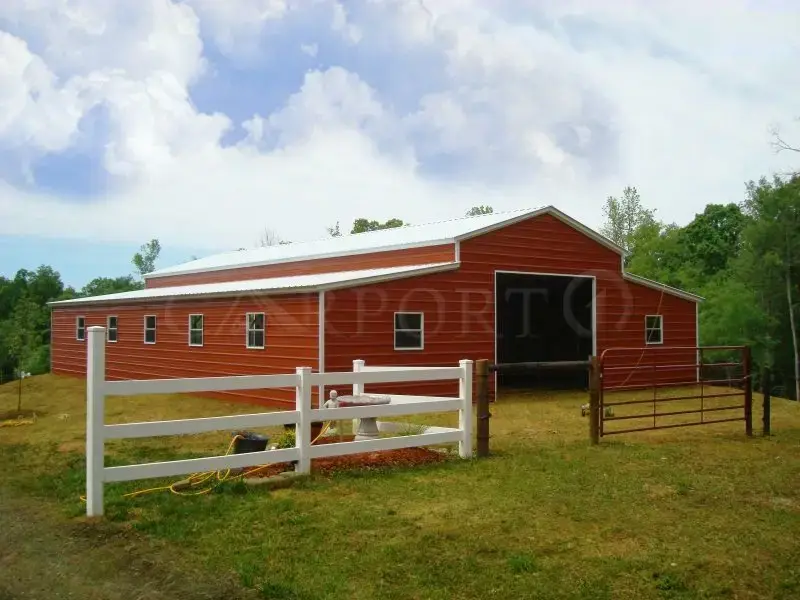
Metal Buildings in Texas: Built to Handle the Biggest State’s Biggest Weather
If there is one thing every Texan understands, it is that the weather here does not play by polite rules. From the blistering summers along the Gulf Coast to the tornado-studded spring skies of the Panhandle, Texas throws everything it has at your property, and it does so with enthusiasm. That is precisely why metal buildings in Texas have become the go-to choice for homeowners, ranchers, business operators, and anyone else who needs a structure that refuses to flinch when Mother Nature loses her temper.
Between 1980 and 2024, Texas endured 190 confirmed billion-dollar weather and climate disasters, including 126 severe storm events, 16 tropical cyclones, 20 droughts, and 11 winter storms. The five-year annual average from 2020 to 2024 jumped to 13.6 events per year. In a state where the question is not whether extreme weather will arrive but when, steel buildings in Texas deliver the durability and resilience that conventional wood-frame construction simply cannot match.
Why Climate Makes Metal Buildings the Smart Choice in Texas
Texas spans multiple climate zones, from the humid subtropical lowlands along the coast to the semi-arid plateaus of West Texas and the continental climate of the Panhandle. Each region presents its own set of challenges, and metal buildings handle all of them with remarkable efficiency.
Hurricane and High-Wind Resistance Along the Gulf Coast
The Texas coastline from Brownsville to Beaumont sits squarely in hurricane territory. In July 2024, Hurricane Beryl made landfall near Matagorda County, causing billions in damage and leaving 2.7 million people without power. Earlier that year, a rare and violent derecho tore through Houston at 100 mph, killing eight people and causing $1.2 billion in damage.
Metal buildings engineered for coastal Texas are typically rated for wind speeds of 150 to 180 mph, far exceeding the requirements for standard residential construction. The continuous steel framing distributes wind loads across the entire structure rather than concentrating force at individual connection points, which is exactly why so many steel carports and metal garages in Texas survive storms that flatten nearby wood buildings.
Tornado Alley and Severe Storms
The northern half of Texas, particularly the Panhandle and North Texas, falls within Tornado Alley. In 2024, a Texas hailstorm produced a state record-breaking 7.25-inch hailstone, and nationally, that year saw the highest count of EF-2 and stronger tornadoes since 2011. Steel buildings with properly anchored foundations and certified wind ratings provide significantly better resistance to straight-line winds and flying debris than conventional structures.
Extreme Heat and UV Exposure
With summer temperatures routinely exceeding 100 degrees Fahrenheit across much of the state, building materials take a beating from thermal expansion and intense UV radiation. Metal roofing panels with reflective coatings can reduce cooling costs by up to 25 percent compared to asphalt shingles, making steel structures an energy-efficient choice for the Texas climate.
Popular Uses for Metal Buildings Across Texas
The sheer size and economic diversity of Texas means metal buildings serve an extraordinary range of purposes here. Texas has the largest economy of any U.S. state after California, driven by oil and gas, agriculture, manufacturing, aerospace, and technology.
- Agricultural buildings and hay barns — Texas leads the nation in cattle, usually exceeding 16 million head, and is the top producer of cotton, hay, sheep, and goats. Ranchers and farmers across the state rely on metal barns to protect livestock, feed, and equipment.
- Equipment storage and workshops — From oil field service companies to construction contractors, covered workspace is essential for maintaining and repairing heavy equipment.
- RV covers and carports — With over 29 million registered vehicles and one of the highest rates of RV ownership in the country, demand for carports in Texas and RV covers is enormous.
- Commercial and retail buildings — Metal buildings provide rapid construction timelines for warehouses, retail spaces, and distribution centers.
- Residential garages and she-sheds — Homeowners increasingly choose metal garages for their durability and low maintenance compared to wood construction in the Texas heat.
Building Specifications for Texas Conditions
Getting the right specs is not optional in a state with this much weather variety. Here are the key engineering considerations for metal buildings in Texas:
Wind Load Ratings
Texas wind load requirements vary dramatically by location. Coastal areas within the Texas Department of Insurance Windstorm Inspection Program require structures to meet stringent wind certifications. Inland areas typically require design wind speeds of 115 to 130 mph, while coastal counties may require 150 mph or higher. Always verify requirements with your local building authority.
Snow Load Considerations
While most of Texas sees minimal snowfall, the Panhandle and far West Texas occasionally experience significant winter weather, as the devastating Winter Storm Uri in 2021 demonstrated. Ground snow loads in these areas typically range from 5 to 15 psf, but designing for at least 10 to 20 psf provides a smart safety margin.
Foundation and Anchoring
Texas soils range from the expansive clay of the Blackland Prairie to the sandy loam of East Texas and the caliche of the Hill Country. Proper foundation design must account for soil conditions, and in hurricane-prone zones, engineered anchor systems are essential to prevent uplift during high-wind events.
Regional Breakdown: Metal Building Needs Across Texas
Gulf Coast and Southeast Texas
Houston, Galveston, Beaumont, Corpus Christi, and the Rio Grande Valley face the most demanding wind requirements in the state. Hurricane-rated steel buildings with certified connections and reinforced framing are not just recommended here, they are often required by code. Corrosion-resistant coatings are also critical due to the salt air and high humidity that accelerates rust on unprotected steel.
Central Texas and the Hill Country
The Austin, San Antonio, and Waco corridor enjoys moderate wind requirements but deals with intense summer heat, flash flooding, and occasional severe thunderstorms with large hail. Metal buildings with proper drainage design and impact-resistant panels perform exceptionally well in this region. The booming population growth in this corridor has driven tremendous demand for metal workshops, garages, and small commercial buildings.
West Texas and the Panhandle
Lubbock, Amarillo, Midland-Odessa, and El Paso face a different set of challenges: sustained high winds, blowing dust, extreme temperature swings from day to night, and occasional winter storms. Metal buildings in this region need robust wind bracing and UV-resistant finishes. The oil and gas industry in the Permian Basin drives enormous demand for covered equipment storage and field offices.
Permitting for Metal Buildings in Texas
Texas building permit requirements vary by jurisdiction. In most cities and counties, permits are required for structures with foundations, electrical or plumbing systems, or that exceed 120 square feet. Successful permit applications typically require architectural plans, structural engineering calculations sealed by a licensed Texas engineer, and site plans showing property boundaries and building placement.
Permit fees generally range from $50 to $500 depending on project size, and residential permits can often be approved within a few days. In unincorporated rural areas, some counties have minimal or no permitting requirements, but it is always worth verifying with the county clerk before beginning construction.
For coastal properties, the Texas Department of Insurance Windstorm Inspection Program requires a WPI-8 certificate for structures in designated catastrophe areas. This certificate verifies that the building meets the adopted windstorm building code and is required for windstorm insurance eligibility.
Why Texans Choose Carport1
At Carport1, we understand that a metal building in Texas is not a luxury, it is infrastructure. We have been engineering and delivering steel carports, metal garages, barns, workshops, RV covers, and commercial buildings across the Lone Star State for years, and we know exactly what it takes to build structures that stand up to Texas weather.
Every building we deliver comes with free delivery and professional installation, which means you are not wrestling with assembly on a 105-degree August afternoon. Our structures are built to meet local wind and load requirements, and our team can help you navigate the permitting process for your specific county or municipality.
Ready to get started? Call us at 1-877-242-0393 or request a free quote online. We will help you spec the right building for your property, your budget, and the wildly unpredictable Texas climate.
Frequently Asked Questions About Metal Buildings in Texas
Do I need a permit for a metal carport in Texas?
In most Texas cities and counties, yes. Structures exceeding 120 square feet generally require a building permit. However, some rural unincorporated areas have minimal permitting requirements. Always check with your local building department before installation to ensure compliance.
What wind rating do I need for a metal building on the Texas coast?
Coastal Texas within the Windstorm Inspection Program area typically requires design wind speeds of 150 mph or higher, depending on your exact location and the risk category of the structure. You will also need a WPI-8 certificate for windstorm insurance eligibility. Inland areas generally require 115 to 130 mph ratings.
Can a metal building survive a Texas tornado?
While no above-ground structure is guaranteed to survive a direct hit from a strong tornado, properly engineered and anchored metal buildings perform significantly better than wood-frame structures in severe wind events. The continuous steel framing and bolted connections distribute forces more effectively than nail-and-lumber construction.
How do metal buildings handle the extreme Texas heat?
Very well, when specified correctly. Metal roofing with reflective coatings reduces solar heat gain substantially, and proper insulation combined with ridge ventilation keeps interior temperatures manageable. Many Texas customers also add insulated panels or spray foam insulation for climate-controlled workshops and garages.
What is the most popular metal building size in Texas?
For residential use, 24×30 and 30×40 metal garages are the most popular sizes in Texas. For agricultural use, 40×60 and larger barn-style buildings dominate. Commercial customers often start at 50×100 and go up from there, particularly in the oil and gas sector where equipment storage demands are substantial.