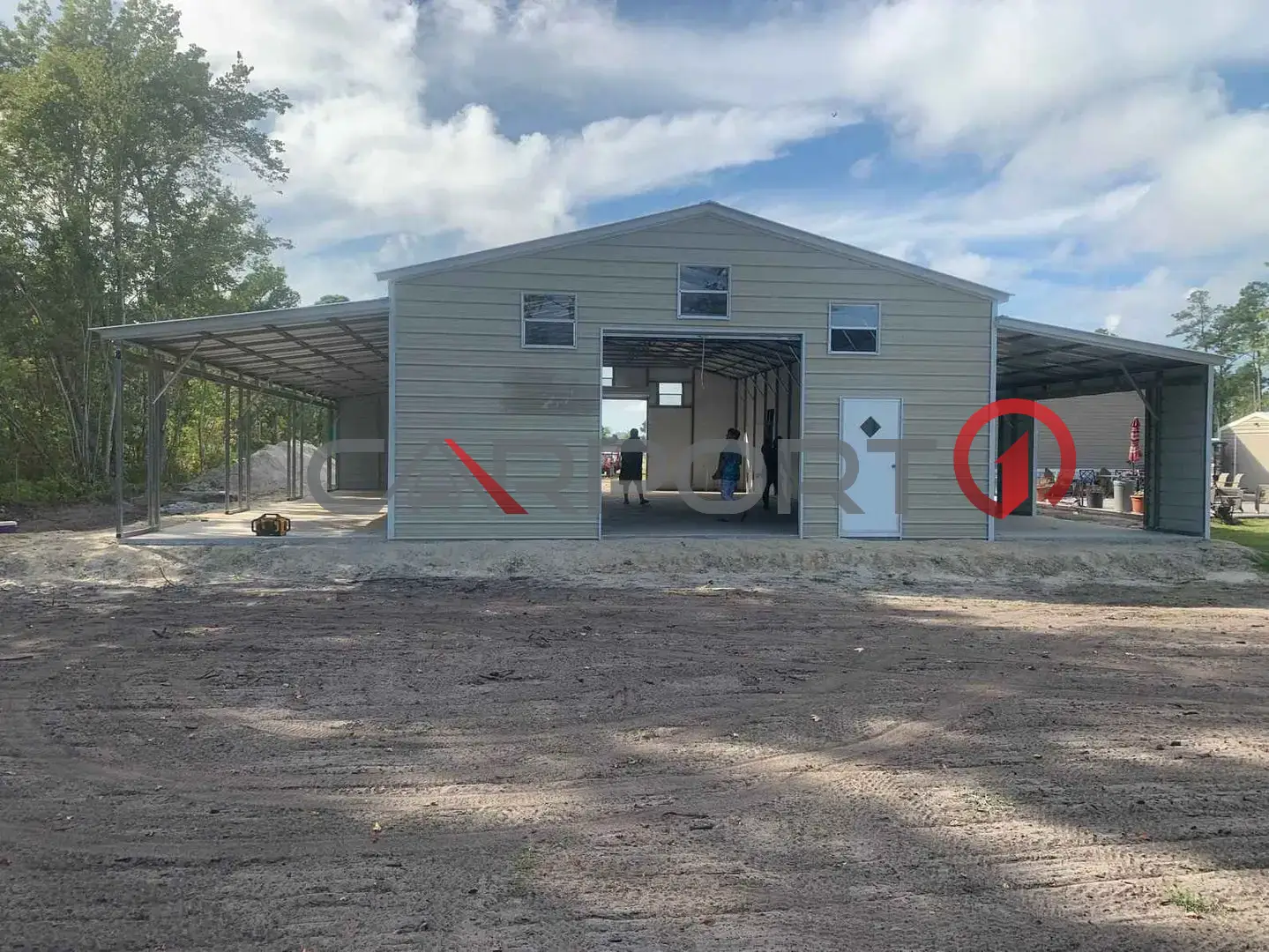
Metal Buildings in Ohio: Built for Every Season the Buckeye State Throws at You
Ohio is a state that refuses to let you get comfortable with the weather. One week you are dealing with lake-effect snow piling up across the northern counties, and the next you are watching severe thunderstorms roll across the central plains. With an average of 28 inches of snow statewide, ground snow loads reaching 20 to 25 pounds per square foot, and over 100 billion-dollar weather disasters recorded between 1980 and 2024, the structures you invest in need to be more than adequate. They need to be engineered for reality.
That is exactly why metal buildings have become the go-to construction choice for Ohio homeowners, farmers, and business owners. Whether you need a steel carport in Columbus to protect your vehicles from ice storms, a workshop in Cincinnati that can handle high winds, or an agricultural barn in rural Wayne County that stands up to decades of freeze-thaw cycles, Carport1 delivers factory-direct metal buildings with free delivery and installation across the entire state of Ohio.
How Ohio’s Climate Shapes Your Building Decisions
Ohio sits squarely in a humid continental climate zone, which is a polite way of saying you will experience virtually every type of weather imaginable within a single calendar year. Understanding the specific challenges this climate poses is critical to choosing the right building materials and specifications.
Winter: Snow, Ice, and the Lake-Effect Factor
Northern Ohio, particularly the counties stretching from Ashtabula to Erie along the Lake Erie snowbelt, can receive upwards of 100 inches of snow in a heavy winter season. Even central Ohio averages 16 to 24 inches of cumulative snowfall, and La Nina patterns bring wetter, stormier conditions across the entire Ohio Valley. The Ohio Building Code mandates a minimum design snow load of 20 PSF, but many northern counties require 25 PSF or more.
A properly engineered metal building handles these loads without concern. Steel trusses distribute weight evenly, and the smooth metal roofing panels allow snow to shed naturally rather than accumulating to dangerous levels. Traditional wood-frame buildings, by contrast, can develop sagging, rot, and structural compromise under persistent snow and ice loads.
Spring and Summer: Severe Storms and Tornadoes
Ohio experienced 69 severe storm events classified as billion-dollar disasters between 1980 and 2024. In 2024, the state saw a record tornado year, and even in more typical years, damaging straight-line winds, large hail, and flash flooding are common from April through September. Metal buildings certified for high wind loads provide superior protection compared to conventional construction, and their continuous steel framing resists the racking forces that tear apart stick-built structures during severe weather events.
Year-Round Humidity and Temperature Swings
Ohio’s humidity averages above 70% for much of the year, and temperature swings of 30 degrees or more within a 48-hour period are not uncommon. Wood warps, cracks, and invites mold under these conditions. Steel does not. Metal buildings with proper ventilation and vapor barriers maintain structural integrity decade after decade regardless of how dramatically the thermometer fluctuates.
Popular Uses for Metal Buildings Across Ohio
The versatility of steel construction is one of the reasons Ohio property owners are increasingly choosing metal buildings for a wide range of applications. Here are the most common uses we see from our Ohio customers.
Agricultural Storage and Livestock Shelters
Agriculture represents a $124 billion sector of Ohio’s economy, employing one in eight residents either directly or indirectly. The state ranks first nationally in Swiss cheese production, third in egg production, sixth in soybeans, and ninth in corn. Ohio’s 77,800 farms need reliable, low-maintenance structures for equipment storage, hay barns, livestock shelters, and grain storage. Metal barns and agricultural buildings from Carport1 are available in clear-span widths up to 60 feet, providing column-free interiors that accommodate modern farm equipment without the obstruction of interior support posts.
Residential Garages and Workshops
From the suburbs of Cleveland and Akron to the small towns of rural Appalachian Ohio, homeowners rely on metal garages to protect vehicles, store tools, and create dedicated workshop space. With Ohio’s property values continuing to rise in metropolitan areas, adding a durable steel garage is one of the most cost-effective ways to increase usable space on your property.
Commercial and Industrial Buildings
Manufacturing is the largest sector of Ohio’s private economy, accounting for 17.5% of the state’s GDP and employing approximately 689,900 workers. Small manufacturers, auto shops, fabrication businesses, and distribution warehouses benefit from the large clear-span interiors, quick construction timelines, and lower insurance costs associated with metal commercial buildings.
RV Covers and Vehicle Storage
Ohio has an active outdoor recreation community, and thousands of residents own RVs, boats, and recreational vehicles that need off-season protection. A metal RV cover is the most affordable way to shield these investments from snow, ice, UV damage, and tree debris without building a full enclosed garage.
Building Specifications for Ohio Conditions
Choosing the right specifications for your Ohio metal building is not optional. It is the difference between a structure that performs flawlessly for 30 years and one that develops problems within the first winter. Here is what we recommend based on Ohio’s specific climate demands.
- Roof style: Vertical roof panels are essential for Ohio’s snow country. Unlike regular or boxed-eave roofs, vertical panels run from ridge to eave, allowing snow and ice to slide off efficiently rather than pooling at the horizontal seams.
- Steel gauge: 14-gauge steel framing is the recommended standard for Ohio. While 12-gauge is available for commercial or agricultural applications requiring extra strength, 14-gauge provides the ideal balance of durability and value for most residential and light commercial projects.
- Certification: All structures should be certified to meet Ohio Building Code requirements, including minimum 20 PSF snow loads and applicable wind speed ratings for your county.
- Anchoring: Concrete slab anchoring is preferred for permanent installations. Mobile home-style auger anchors are available for gravel or earth pad installations where concrete is not feasible.
- Leg height: A minimum of 10-foot leg height is recommended for garage and workshop applications to accommodate trucks, SUVs, and overhead door clearance. For RV covers, 14-foot legs are standard.
Regional Guide: Metal Buildings by Ohio Region
Northern Ohio: Cleveland, Akron, Toledo, and the Snowbelt
Northern Ohio is where building specifications matter most. The Lake Erie snowbelt can deliver punishing winter conditions, with Ashtabula and Geauga counties regularly exceeding 80 inches of annual snowfall. Vertical roof panels and certified snow load ratings are non-negotiable in this region. Property owners in the Cleveland metro area, Akron, Canton, Youngstown, and Toledo consistently choose enclosed metal garages and workshops that provide year-round protection from the elements. Many agricultural operations across the flat farmland of northwestern Ohio also rely on large clear-span metal barns for equipment and grain storage.
Central Ohio: Columbus, Springfield, and the Agricultural Heartland
Central Ohio balances suburban growth with deep agricultural roots. The Columbus metropolitan area is one of the fastest-growing regions in the Midwest, and demand for metal garages, carports, and small commercial buildings has increased steadily. Outside the metro area, the rich farmland stretching through Delaware, Marion, Morrow, and Knox counties supports significant soybean, corn, and livestock operations that depend on metal agricultural buildings.
Southern Ohio: Cincinnati, Dayton, and Appalachian Country
Southern Ohio sees milder winter conditions than the north but faces its own challenges. The Ohio River valley is prone to flooding, and the hilly terrain of Appalachian Ohio requires careful site preparation. Cincinnati and Dayton are major population centers where residential metal garages are in high demand. Further east, the rolling hills of Appalachian Ohio support small farms, hunting properties, and rural homesteads where metal barns, carports, and utility buildings serve essential roles.
Permitting Your Metal Building in Ohio
Ohio enforces the Ohio Building Code statewide through the Ohio Board of Building Standards, but individual municipalities have authority to adopt additional requirements. Here is what you need to know before ordering your metal building.
- Permit thresholds: Most Ohio municipalities require a building permit for accessory structures exceeding 200 square feet. Some jurisdictions, including Toledo, require permits for all accessory buildings regardless of size.
- Zoning setbacks: Typical Ohio zoning codes require a minimum of 3 feet from side and rear property lines and 60 feet from front property lines for accessory buildings. These vary by municipality.
- Lot coverage: Many jurisdictions limit accessory building coverage to 30% of the rear yard area.
- Maximum structures: Some municipalities, such as Toledo, limit properties to two accessory buildings per lot.
- Plan submission: You will typically need to submit a site plan showing the proposed location, dimensions, and distances to property lines and existing structures.
Carport1 provides engineered drawings and certification documents with every order, which streamlines the permitting process with your local building department. We recommend contacting your city or county building office before placing your order to confirm local requirements.
Why Ohio Property Owners Choose Carport1
There are dozens of metal building dealers operating in Ohio, but Carport1 has built a reputation as the preferred supplier for Buckeye State customers for several key reasons.
- Factory-direct pricing eliminates middleman markups, saving you 15-25% compared to local dealer pricing on comparable structures.
- Free delivery and installation across all 88 Ohio counties, from the Lake Erie shore to the Ohio River.
- Certified structures engineered to meet Ohio Building Code requirements for snow loads, wind speeds, and structural integrity.
- Customization including your choice of colors, door sizes, window placement, insulation, and interior partition walls.
- Rent-to-own and financing options that make metal building ownership accessible regardless of budget.
Ready to get started? Call us at 1-877-242-0393 or request a free quote online today.
Frequently Asked Questions: Metal Buildings in Ohio
Do I need a permit for a metal carport in Ohio?
In most Ohio municipalities, yes. Any accessory structure over 200 square feet typically requires a building permit and must comply with local zoning setback requirements. Some cities require permits for all structures regardless of size. Contact your local building department before installation to confirm specific requirements for your area.
What snow load rating do I need for a metal building in northern Ohio?
The Ohio Building Code requires a minimum ground snow load of 20 PSF statewide, but counties in the Lake Erie snowbelt region, including Ashtabula, Lake, Geauga, and Cuyahoga counties, often require 25 PSF or higher. We recommend a vertical roof style for any metal building in northern Ohio to ensure efficient snow shedding.
How long does it take to get a metal building delivered and installed in Ohio?
Typical lead times for Carport1 orders in Ohio range from 4 to 8 weeks depending on the size and complexity of the structure, current demand, and your specific location within the state. Our team will provide a specific delivery estimate when you place your order.
Can I put a metal building on a gravel pad instead of concrete in Ohio?
Yes. Many Ohio property owners install metal buildings on compacted gravel pads, especially in rural and agricultural settings. The structure is secured using mobile home-style auger anchors driven into the ground. However, for enclosed garages and workshops, a concrete slab provides a cleaner, more permanent foundation and may be required by some local building codes.
Are metal buildings a good investment for Ohio farms?
Absolutely. With agriculture representing a $124 billion industry in Ohio, metal buildings are the most cost-effective and durable solution for equipment storage, hay barns, livestock shelters, and machinery shops. They require minimal maintenance, resist pest damage and rot, and can be expanded or reconfigured as your operation grows. Many Ohio farmers report that a quality metal barn pays for itself within a few years through reduced equipment maintenance costs and improved operational efficiency.