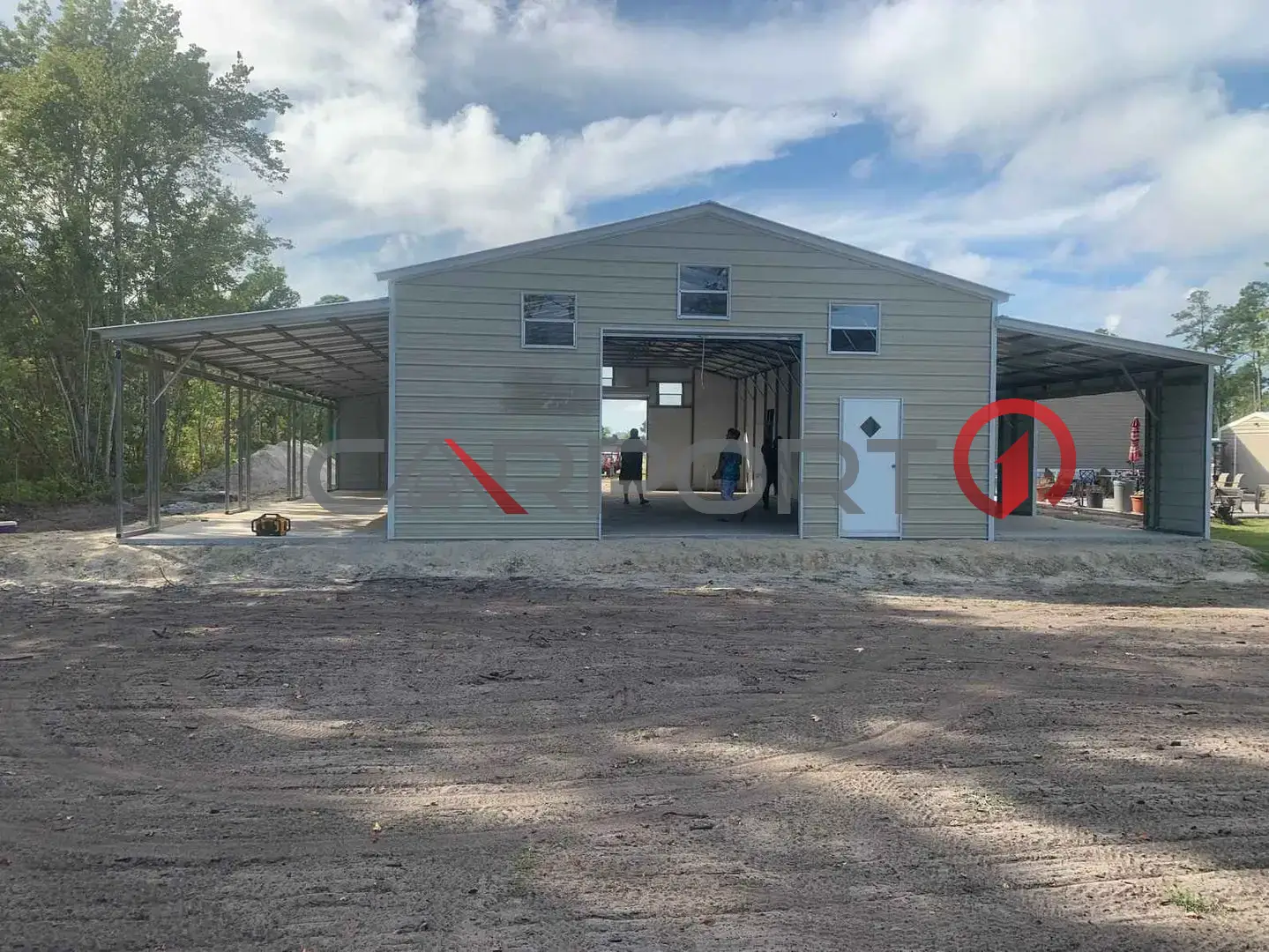
Metal Buildings in Oregon: From Coastal Rain to Cascade Snow, Engineered for the Pacific Northwest
Oregon is not one climate. It is several, stacked side by side across a landscape that ranges from temperate rainforests receiving over 100 inches of rainfall per year to high desert plateaus where precipitation barely reaches 10 inches. The Willamette Valley, home to more than two-thirds of the state’s population, sits in a warm-summer Mediterranean climate zone that delivers 35 to 45 inches of annual rainfall, virtually all of it concentrated between October and May. Meanwhile, the Cascade Range accumulates snowpacks measured in feet, and the Oregon Coast endures sustained winds that test every structure along the shoreline.
For property owners across this remarkably diverse state, metal buildings from Carport1 provide the durability, moisture resistance, and structural performance that Oregon’s conditions require. We deliver and install metal carports, garages, barns, workshops, RV covers, and commercial steel buildings throughout Oregon, with free delivery and professional installation included on every order.
Understanding Oregon’s Climate Challenges for Building Owners
The fundamental challenge of building in Oregon is moisture. Whether it arrives as rain, snow, fog, or persistent humidity, water is the relentless force that determines how long any structure will last in this state. Metal buildings address this challenge in ways that wood construction simply cannot match.
Western Oregon: The Wet Side
West of the Cascades, Oregon’s climate is classified as Csb under the Koppen system, a warm-summer Mediterranean climate characterized by mild, wet winters and dry summers. Annual rainfall in the Willamette Valley averages 36 to 44 inches, with Portland averaging 43 inches and Eugene slightly less. The Coast Range communities receive even more, with some locations exceeding 80 inches annually. This relentless moisture creates ideal conditions for wood rot, mold growth, and structural decay in conventional construction.
Steel does not rot. It does not grow mold. A properly installed metal building with adequate ventilation and a vapor barrier will maintain its structural integrity through decades of Oregon rain without the ongoing repair and replacement costs that plague wood-frame outbuildings in the Willamette Valley.
Central and Eastern Oregon: Snow and Temperature Extremes
Cross the Cascade Range and Oregon transforms dramatically. Bend, Redmond, and the surrounding high desert communities sit at elevations of 3,500 feet or higher, where winter temperatures regularly drop below zero and annual snowfall can exceed 30 inches. The mountain communities along the Cascade crest, from Government Camp to Crater Lake, measure snow in feet rather than inches. Metal buildings in this region must be engineered for significant snow loads, and vertical roof panels are essential to prevent dangerous accumulation.
Seismic Considerations
Oregon sits along the Cascadia Subduction Zone, one of the most significant seismic hazards in North America. The Oregon Structural Specialty Code includes seismic design requirements for all construction, and metal buildings inherently perform well during seismic events because steel framing is ductile, meaning it flexes rather than fracturing under dynamic loads. This is a meaningful advantage over rigid masonry or brittle wood connections during earthquake shaking.
How Oregonians Use Metal Buildings
Timber and Forestry Operations
Oregon leads the nation in softwood lumber production, with nearly three-fifths of the state’s land either producing or capable of producing commercial timber. Despite significant changes in the industry over recent decades, logging, milling, and forest management operations remain major employers across rural Oregon. Metal buildings serve the timber industry as equipment storage facilities, maintenance shops, log sorting sheds, and small mill buildings. Their resistance to fire, an increasingly critical concern in Oregon’s wildfire environment, adds another dimension of value for forestry operations.
Wine Industry and Agriculture
Oregon ranks among the top wine-producing states in the nation, with over 900 wineries concentrated primarily in the Willamette Valley. These operations require climate-controlled storage, barrel rooms, crush pad covers, and tasting room structures that metal buildings can accommodate with proper insulation packages. Beyond wine, Oregon agriculture produces wheat, potatoes, hazelnuts (the state produces over 99% of the U.S. commercial crop), berries, and nursery stock. Metal agricultural buildings are the most practical and affordable option for crop storage, equipment protection, and processing facilities.
Technology Sector Support
Oregon’s technology corridor in Washington County, anchored by Intel’s massive operations, has created a thriving ecosystem of small and medium manufacturers, fabricators, and tech service companies. Metal commercial buildings provide the flexible, affordable workspace these businesses need, with large overhead doors for equipment movement, clear-span interiors for open floor plans, and the ability to add electrical, plumbing, and HVAC systems as the business grows.
Residential Vehicle Protection
Oregonians are outdoor enthusiasts. The state’s proximity to mountains, rivers, lakes, and the coast means a disproportionate number of households own RVs, boats, ATVs, and other recreational vehicles. Metal carports and RV covers are the most economical way to protect these investments from Oregon’s eight months of rain, UV exposure during the dry summer months, and falling debris from the towering Douglas firs that shade many Oregon properties.
Oregon Building Specifications: What You Need to Know
- Roof style: Vertical roof panels are strongly recommended for all Oregon installations. In western Oregon, vertical panels prevent water pooling at horizontal seams during extended rain events. In central and eastern Oregon, they are essential for snow shedding.
- Snow loads: Requirements vary dramatically across Oregon. Coastal and Willamette Valley installations may require minimal snow load ratings, while Bend, La Pine, and Cascade communities require substantial snow load engineering. Your local building department will specify the exact requirement for your location.
- Seismic compliance: The Oregon Structural Specialty Code requires seismic design for all structures. Carport1 provides engineered structures that meet Oregon’s seismic requirements.
- Wind loads: Coastal Oregon installations require elevated wind load certifications due to sustained and gusting ocean winds. Inland installations typically require standard wind load ratings.
- Moisture management: Proper ventilation, ridge vents, and vapor barriers are critical for any enclosed metal building in western Oregon to prevent interior condensation.
Regional Guide to Metal Buildings in Oregon
Willamette Valley: Portland, Salem, Eugene, and Corvallis
The Willamette Valley is Oregon’s population center and the region where Carport1 sees the highest demand. Residential metal garages, carports, and workshops dominate orders from the Portland metro area, while agricultural buildings and winery structures are more common in the rural valley communities south of Salem. The flat valley floor with clay-heavy soils requires proper site drainage preparation before installation. Most Willamette Valley municipalities require building permits for structures exceeding 200 square feet, and setback requirements from property lines are strictly enforced in urban and suburban areas.
Central Oregon: Bend, Redmond, and the High Desert
Central Oregon has experienced explosive population growth, and the demand for metal buildings has grown alongside it. The combination of significant snowfall, temperature extremes, and relatively affordable land creates ideal conditions for metal building applications. Property owners in this region frequently order enclosed garages, workshops, and RV storage buildings designed to handle 30+ PSF snow loads. The high desert landscape means most installations are on gravel pads rather than concrete slabs, though concrete is increasingly preferred for workshop and garage applications.
Southern Oregon and the Coast
Southern Oregon, centered around Medford and the Rogue Valley, has its own distinct climate that is warmer and drier than the Willamette Valley. Metal buildings here serve the region’s pear orchards, vineyards, and ranching operations. Along the Oregon Coast from Astoria to Brookings, wind load certification is the primary engineering concern. Salt air corrosion is an additional factor for coastal installations, and we recommend upgraded paint systems and galvanized hardware for any metal building within 10 miles of the ocean.
Permitting Metal Buildings in Oregon
Oregon takes building permits seriously, and the consequences of skipping the process can be severe, including stop-work orders, fines, and even demolition orders for unpermitted structures.
- Permit threshold: Building or moving a carport, garage, or shed of more than 200 square feet requires a local building permit in Oregon. A standard single-car metal carport at 240 square feet triggers this requirement.
- Applicable codes: The Oregon Residential Specialty Code, Structural Specialty Code (for snow, wind, and seismic loads), and potentially Electrical, Plumbing, and Mechanical codes if you are adding utilities.
- Local variation: Oregon’s 36 counties and 240-plus cities each interpret the state building code with their own amendments and requirements. What is approved in Eugene may not be approved in Medford or Portland. Always verify with your specific local building department.
- Permit expiration: Oregon building permits expire if work is not started within 180 days of issuance, or if work is suspended for 180 days or more.
- Engineered plans: Carport1 provides certified engineered drawings with Oregon orders to satisfy local plan review requirements.
Why Carport1 for Your Oregon Metal Building
Oregon presents unique challenges that require a supplier who understands Pacific Northwest conditions. Carport1 delivers on that understanding with every order.
- Climate-appropriate engineering including proper snow load, wind load, and seismic certifications for your specific Oregon location.
- Free delivery and professional installation statewide, from Astoria to Ontario, Portland to Klamath Falls.
- Factory-direct pricing with no middleman markups.
- Full customization including colors, doors, windows, insulation packages, and interior buildout options.
- Financing and rent-to-own options available for qualified Oregon customers.
Contact us at 1-877-242-0393 or request your free Oregon quote online.
Frequently Asked Questions: Metal Buildings in Oregon
Will a metal building rust in Oregon’s wet climate?
Modern metal buildings use galvanized steel framing and baked-on enamel panel coatings that are specifically designed to resist corrosion. With proper installation, including adequate ventilation and a vapor barrier for enclosed structures, a metal building in Oregon will provide decades of service without rust-related issues. For coastal installations within 10 miles of the ocean, we recommend upgraded paint systems and galvanized hardware to address the additional salt air exposure.
Do I need a building permit for a metal carport in Oregon?
Yes, if the structure exceeds 200 square feet, which includes most standard carports. Oregon enforces building permit requirements rigorously, and unpermitted structures can face stop-work orders, fines, or demolition orders. Contact your local building department before ordering to understand the specific requirements for your location.
What snow load rating do I need for a metal building in Bend, Oregon?
Snow load requirements in Bend and surrounding Deschutes County are significantly higher than in the Willamette Valley due to elevation and snowfall patterns. Your local building department will specify the exact ground snow load requirement for your site. Carport1 engineers structures to meet or exceed your local snow load requirement, and vertical roof panels are standard for all Central Oregon installations.
Can I use a metal building as a winery or agricultural processing facility in Oregon?
Absolutely. Metal buildings are widely used throughout Oregon’s wine and agriculture industries for barrel storage, crush pad covers, equipment storage, and processing facilities. With proper insulation packages, climate control can be maintained for wine storage applications. Zoning approval for agricultural use buildings is typically straightforward in areas zoned for farm or rural use.
How does a metal building perform during an earthquake in Oregon?
Steel-framed buildings perform exceptionally well during seismic events because steel is ductile, meaning it flexes and absorbs energy rather than fracturing like masonry or failing at rigid connections like wood framing. All Carport1 structures for Oregon are engineered to comply with the Oregon Structural Specialty Code’s seismic design requirements.